


SSRF: A Hidden Gateway to Your Internal Network, or How We Bypassed Enterprise WAF Protection During a Penetration Test
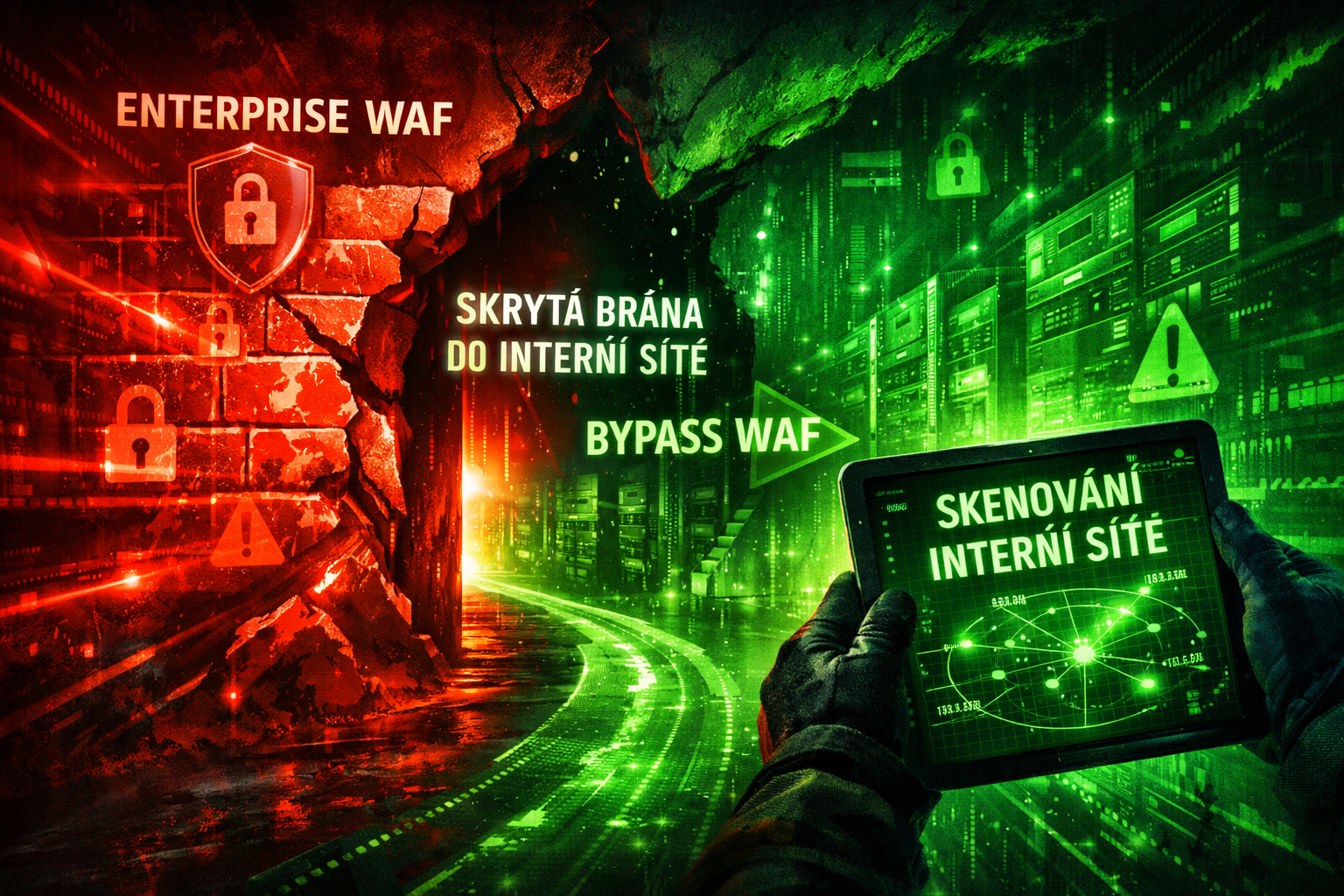
Imagine that your web server suddenly starts working against you. Not because someone hacked it from the outside, but because an attacker convinced it to open the door to your internal network on its own.
That’s exactly what happened to us recently during a security test—a so-called pentest—at a client’s production environment.
We discovered a classic SSRF vulnerability that allowed us to scan internal ports, access administrative interfaces, and perform detailed mapping of the entire internal network. And all of this despite the deployment of an enterprise WAF solution, which is among the strongest protections on the market. No magic, just a clever trick that the server performed on its own.
What is SSRF and why is it so dangerous?
Simply put: Server-Side Request Forgery means that the application allows a user (or an attacker) to enter a URL that the server loads itself. Instead of loading an image from the internet, it might load, for example, an internal admin panel at http://192.168.1.50:8080/admin or the metadata of a cloud instance.
The server trusts itself, and that is exactly what the attacker exploits. From the outside, it looks like a normal request, but internally, the server is going places it normally never should.
Case Study: Bypassing the WAF and Scanning the Internal Network
During the test, we identified a feature that allowed us to specify external resources (for example, to download data or generate reports). All it took was a few URL modifications, and suddenly:
The server willingly scanned our internal ports (port scanning).
It revealed active administrative interfaces that are not accessible from the outside.
It began mapping the entire internal network, so we could see which services were running on which IP addresses.
And all of this despite the enterprise WAF. While the WAF blocks classic attacks, SSRF is “internal,” so it operates on its own. A classic bypass that we see quite often.
Data leakage risks and the threat of ransomware via internal APIs
Now imagine this in the hands of a real attacker, not an ethical hacker:
First few minutes – the attacker maps the internal network and discovers vulnerabilities, such as outdated admin panels, databases, and internal APIs.
Next step – via the internal admin interface, they gain access to sensitive data, API keys, or cloud credentials.
And finally – with this data, they can:
- steal customer data,
- deploy ransomware directly onto internal file servers,
- encrypt key systems and demand a ransom,
- quietly move further and further across the network.
We’ve seen this happen countless times in real-world incidents. A single SSRF is enough to turn a simple web application into a gateway to the entire company.
Why aren’t firewalls and WAF protection enough to ensure security?
Because many companies assume that since they have a WAF and a firewall, they’re in the clear. We now realize it isn’t enough. SSRF is one of those vulnerabilities that seem harmless at first glance, but are actually like a Trojan horse inside your infrastructure.
Cybersecurity audits and professional penetration tests from Fitio
Contact us. We conduct regular penetration tests that uncover exactly these types of vulnerabilities, including those that enterprise WAFs miss. Don’t wait for someone to exploit them. Let us find and fix them before they become a real problem.
Your data, your network, your peace of mind. Contact the experts at Fitio and let’s schedule a no-obligation audit.
#Cybersecurity #SSRF #pentesting #ethicalhacking